
A 2026 guide to hunger pangs, acid-related pain, ulcers, gastritis, low blood sugar, safe relief, and warning signs
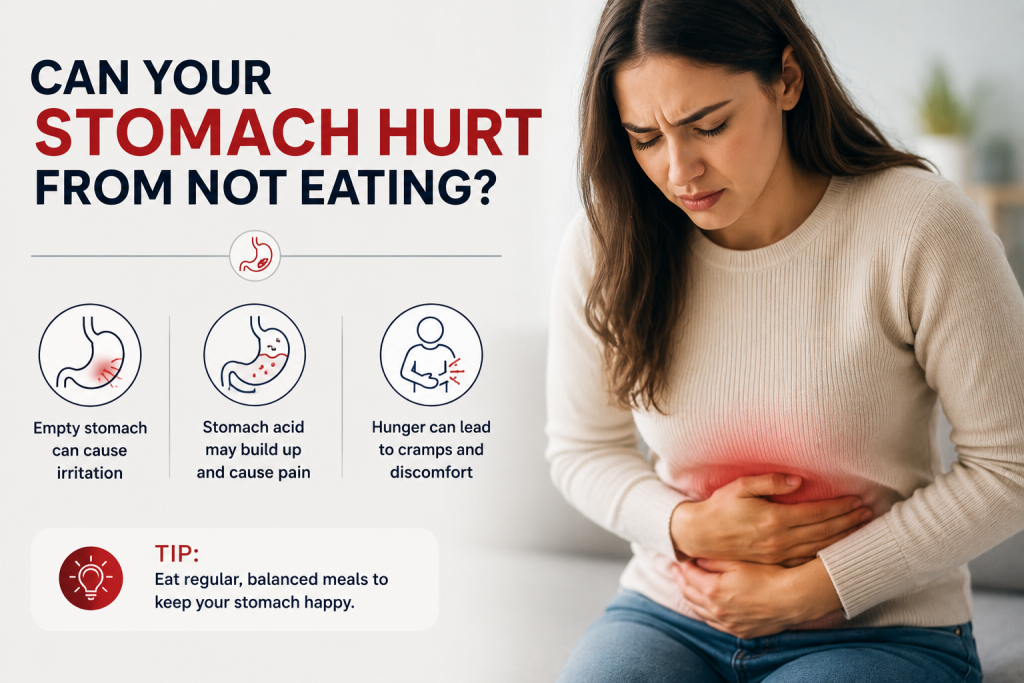
If you have ever wondered, can your stomach hurt from not eating, the answer is yes. An empty stomach can trigger normal hunger contractions that feel like gnawing, squeezing, rumbling, or mild upper-abdominal discomfort. For many people, the sensation fades after eating and is not a sign of disease.
But recurring pain when you have not eaten should not automatically be dismissed as hunger. Peptic ulcers can hurt when the stomach is empty or at night, gastritis can cause upper-abdominal burning or discomfort, and functional indigestion can create pain that does not follow a simple meal schedule. The pattern, location, severity, and accompanying symptoms matter more than the fact that you skipped a meal.
| The short answer
Mild, temporary gnawing or cramping that appears after several hours without food and improves after a balanced snack or meal is often consistent with hunger pangs. Pain that is severe, persistent, repeatedly wakes you at night, comes with vomiting, black stools, blood, unintentional weight loss, fainting, fever, or significant tenderness should be medically evaluated. |
Key Takeaways
- Not eating can cause ordinary hunger pangs because an empty stomach and intestines continue to contract as hunger signals rise.
- Hunger pain is usually temporary and often feels like gnawing, emptiness, rumbling, or mild cramping in the upper abdomen.
- If pain repeatedly occurs when your stomach is empty and briefly improves after food, a peptic ulcer is one possible explanation and deserves medical evaluation if the pattern persists.
- Gastritis and indigestion can also cause upper-abdominal burning, nausea, early fullness, or discomfort, but their symptoms are not always tied neatly to meals.
- Skipping a meal does not usually cause true hypoglycemia in a healthy person without diabetes. It is more concerning in people using insulin or certain diabetes medicines.
- A small balanced meal, water, and a return to a regular eating schedule may help ordinary hunger-related discomfort.
- Do not repeatedly treat unexplained stomach pain with NSAID pain relievers such as ibuprofen or naproxen without medical guidance because NSAIDs can contribute to gastritis and peptic ulcers.
- Seek urgent care for vomiting blood, black or tarry stools, severe constant abdominal pain, fainting, significant dizziness, or other signs of internal bleeding.
What Does Hunger Pain Actually Feel Like?
True hunger discomfort is often called a hunger pang or hunger pain. It typically feels different from the sharp, localized pain of an injury or the severe pain of an acute abdominal condition.
According to Cleveland Clinic’s explanation of hunger pangs, the sensation can include gnawing, rumbling, emptiness, abdominal discomfort, or noticeable contractions. The hormone ghrelin rises before meals and helps signal hunger, while muscles in the stomach and intestines continue to contract even when little food is present.
| Feature | More Consistent With Hunger | More Reason to Look Further |
| Timing | Appears after several hours without food | Occurs randomly, constantly, or repeatedly at night |
| Feeling | Gnawing, emptiness, rumbling, mild cramping | Severe burning, stabbing, intense tenderness, persistent pressure |
| After eating | Improves fairly soon | No improvement, or food makes it much worse |
| Other symptoms | No major symptoms | Vomiting, bleeding, fever, weight loss, trouble swallowing |
| Duration | Short-lived | Keeps returning for days or weeks |
Why Can an Empty Stomach Hurt?
There is not one single mechanism. Several normal processes overlap when you go longer than usual without food.
- Hunger hormones rise. Ghrelin and other appetite signals tell the brain that energy intake is due.
- The stomach and intestines still contract. These movements can be felt more clearly when the digestive tract is relatively empty.
- Gas and fluid move through the gut. This can create rumbling and a hollow or crampy sensation.
- Your usual meal timing matters. If your body is accustomed to eating at a certain time, hunger sensations may become noticeable around that schedule.
- A prior meal may not have been filling. Meals low in protein, fiber, or overall calories may leave you hungry sooner.
- Dehydration can be misread as hunger. Some people notice stomach sensations when they actually need fluids.
The important point is that ordinary hunger pain should settle once the body gets what it needs. If it does not, another digestive cause becomes more likely.
What If the Pain Is Burning and Gets Better After You Eat?
That pattern can happen with a peptic ulcer, especially an ulcer in the duodenum, which is the first part of the small intestine. Peptic ulcers are open sores in the lining of the stomach or duodenum. The two most common causes are Helicobacter pylori infection and regular use of nonsteroidal anti-inflammatory drugs, or NSAIDs.
The National Institute of Diabetes and Digestive and Kidney Diseases notes that ulcer pain can be dull or burning. For some people, it appears when the stomach is empty or at night and improves for a short time after eating. For others, eating makes the pain worse.
That means relief after food is not enough to diagnose an ulcer. If this pattern happens repeatedly, especially over several days or weeks, a clinician may consider testing for H. pylori, reviewing NSAID use, and deciding whether an upper endoscopy or other evaluation is needed.
| Do not self-diagnose an ulcer from meal timing alone
Hunger pangs, gastritis, functional dyspepsia, reflux, and ulcers can overlap. The same person can also have more than one condition at the same time. |
Can Gastritis Hurt More When You Have Not Eaten?
It can, but gastritis does not have one predictable meal pattern. Gastritis means inflammation of the stomach lining, while gastropathy refers to damage with little or no inflammation. Either can cause upper-abdominal discomfort, nausea, vomiting, appetite changes, or a feeling of getting full too quickly.
Some people describe the discomfort as burning or aching on an empty stomach, while others notice symptoms after meals. Many people with gastritis have no symptoms at all.
Common contributors include H. pylori infection, alcohol, and medicines that irritate the stomach lining, particularly NSAIDs. Food itself is not considered the main cause of most gastritis, so simply eating more often does not treat the underlying problem if the stomach lining is inflamed.
Could It Be Indigestion Even If You Have Not Eaten?
Yes. Indigestion, also called dyspepsia, is a group of symptoms that can include upper-abdominal pain or burning, early fullness, uncomfortable fullness after eating, bloating, nausea, and belching.
NIDDK notes that indigestion is not always related to eating. Many chronic cases are classified as functional dyspepsia, a disorder of gut-brain interaction in which symptoms can occur even when tests do not reveal a structural disease.
This is one reason a person can feel pain that seems like hunger even after they have eaten, or feel empty-stomach discomfort that does not consistently disappear with food.
Can Not Eating Cause Low Blood Sugar and Stomach Pain?
Skipping food can make you feel hungry, weak, shaky, irritable, or lightheaded, but true hypoglycemia is not the usual explanation in a healthy person without diabetes. The body normally releases stored glucose and adjusts hormones to keep blood sugar in a safe range during ordinary fasting.
Cleveland Clinic notes that fasting hypoglycemia in people without diabetes is uncommon and usually points to another factor such as heavy alcohol use, severe illness, certain hormone disorders, liver or kidney disease, or rare insulin-producing tumors.
The situation is different for someone using insulin or certain diabetes medications. Delaying or skipping a meal after medication can cause dangerous low blood sugar. Symptoms can include shaking, sweating, intense hunger, dizziness, fast heartbeat, confusion, and weakness.
| If you use diabetes medicine
Follow your own hypoglycemia plan if you develop symptoms and check your glucose when advised by your clinician. Severe confusion, seizure, loss of consciousness, or inability to safely swallow is an emergency. |
Where the Pain Is Can Give You a Clue
People often use the word “stomach” for almost any abdominal pain, but the location can help separate simple hunger discomfort from problems involving other organs.
| Location | Possible Pattern | When It Deserves Attention |
| Upper middle abdomen | Hunger, gastritis, dyspepsia, peptic ulcer | Persistent burning, vomiting, bleeding, nighttime pain |
| Right upper abdomen | Less typical for hunger | Pain after fatty meals, fever, vomiting, or pain into shoulder/back |
| Lower abdomen | More likely bowel, bladder, or pelvic causes than the stomach itself | Persistent focal pain, fever, bowel changes, urinary symptoms |
| Severe pain into the back | Not a typical hunger pattern | Needs prompt assessment, especially with vomiting or fever |
What Can You Do for Ordinary Hunger-Related Stomach Pain?
If the discomfort is mild, clearly connected to going longer than usual without food, and there are no warning signs, the goal is simply to restore a normal eating and hydration pattern.
- Have a small balanced snack or meal rather than eating a very large amount quickly.
- Include protein and fiber, such as yogurt with fruit, eggs with whole-grain toast, nuts with fruit, or another combination you tolerate well.
- Drink water, especially if you have been busy, exercising, traveling, or consuming a lot of caffeine.
- If large meals worsen symptoms, try smaller meals at regular intervals while you arrange medical advice for recurring pain.
- Keep a short symptom log noting the time of pain, last meal, what you ate, medication use, bowel changes, and whether food helped.
The goal is not to graze constantly to suppress pain. If you repeatedly need food to stop stomach pain, the pattern itself is worth discussing with a healthcare professional.
What Should You Avoid Doing?
- Do not repeatedly take ibuprofen, naproxen, or similar NSAIDs for unexplained stomach pain unless a clinician has told you they are appropriate.
- Do not assume spicy food or stress caused an ulcer. They may worsen symptoms, but H. pylori and NSAID exposure are the major causes of peptic ulcers.
- Do not use antacids as proof that the problem is harmless. Acid-relieving medicine can temporarily improve ulcer or reflux symptoms without treating the underlying cause.
- Do not ignore recurrent nighttime pain, unintentional weight loss, persistent nausea, or progressive loss of appetite.
- Do not continue fasting if you feel faint, confused, or severely weak, especially if you have diabetes, are pregnant, are ill, or take medicines that affect blood sugar.
When Should You Call a Doctor?
Make a non-emergency appointment if the pain is new and keeps returning, lasts more than a few days, regularly wakes you from sleep, is linked with nausea or early fullness, or changes your appetite and eating pattern.
A clinician may ask about NSAID use, alcohol, meal timing, weight change, bowel movements, family history, and medication use. Depending on the pattern, testing may include H. pylori breath or stool testing, blood tests, or an upper endoscopy.
When Is Empty-Stomach Pain an Emergency?
Do not wait for the next meal to see if symptoms improve when there are signs of bleeding or a severe abdominal problem.
- Vomiting blood or material that looks like coffee grounds.
- Black, tarry stools or visible blood in stool.
- Severe, constant, or rapidly worsening abdominal pain.
- Fainting, marked dizziness, weakness, or shortness of breath.
- A rigid or very tender abdomen.
- Repeated vomiting with inability to keep fluids down.
- Chest, jaw, neck, or arm pain with upper-abdominal discomfort.
- Yellowing of the skin or eyes, especially with abdominal pain.
These symptoms can occur with gastrointestinal bleeding or other urgent conditions and need prompt medical care.
A Simple Pattern Check: Hunger or Something Else?
| Question | If Yes | If No | What It Suggests |
| Did the discomfort start after an unusually long gap between meals? | Hunger becomes more likely | Look for another pattern | Timing clue only |
| Does a normal snack or meal relieve it? | Supports hunger, but does not rule out ulcer | Less typical for simple hunger | Track how quickly it changes |
| Is the pain mild and short-lived? | More reassuring | Persistent or severe pain needs evaluation | Severity matters |
| Are there bleeding, weight-loss, fever, or vomiting symptoms? | Seek medical care promptly | Routine monitoring may be reasonable | Red flags outweigh meal timing |
| Does it happen repeatedly for weeks? | Medical evaluation is appropriate | Occasional hunger pain is common | Repetition changes the concern level |
Frequently Asked Questions
Can skipping breakfast make your stomach hurt?
Yes. If your body is used to eating in the morning, delaying breakfast can lead to hunger pangs, rumbling, or mild cramping. The discomfort should improve after eating. Repeated burning pain or pain with other symptoms deserves evaluation.
Why does my stomach hurt when I am hungry but I do not feel like eating?
Hunger signals and appetite do not always feel identical. Stress, nausea, illness, dehydration, medications, gastritis, and indigestion can produce stomach sensations even when food is not appealing. Persistent appetite loss plus abdominal pain should be discussed with a healthcare professional.
Why does my stomach hurt in the morning before I eat?
A long overnight fast can cause ordinary hunger discomfort. However, recurring burning pain before breakfast or pain that wakes you during the night can also occur with peptic ulcer disease or other upper-digestive conditions.
Can stomach acid hurt an empty stomach?
The stomach normally produces acid even when it is empty, and the stomach lining is designed to protect itself. If the lining is inflamed or an ulcer is present, acid exposure may contribute to burning or gnawing pain. Normal stomach acid does not usually damage a healthy stomach simply because you skipped a meal.
Can not eating cause nausea?
Yes. Hunger, dehydration, stress, and changes in blood sugar can make some people feel mildly nauseated. Ongoing nausea, repeated vomiting, weight loss, or inability to eat normally needs medical evaluation.
Does eating help an ulcer?
Sometimes temporarily. NIDDK notes that some ulcer pain occurs when the stomach is empty and may improve briefly after eating, while other ulcers hurt more after food. Eating is not an ulcer treatment. H. pylori infection and NSAID-related injury require appropriate medical management.
How long should hunger pain last after eating?
There is no exact medical cutoff, but ordinary hunger discomfort usually eases as the stomach receives food and the hunger signal falls. Pain that stays strong, returns very quickly, or occurs repeatedly despite regular meals is less consistent with simple hunger.
Can anxiety make empty-stomach pain worse?
Yes. Stress and anxiety can change gut motility and increase awareness of normal intestinal contractions. They can also worsen functional indigestion symptoms. That does not mean persistent pain should automatically be blamed on anxiety.
The Bottom Line
Your stomach can hurt from not eating, and most people experience this at some point. Normal hunger pangs tend to be mild, temporary, and linked to a longer-than-usual gap between meals. They usually improve after you eat and are not accompanied by bleeding, fever, significant vomiting, or weight loss.
The same empty-stomach timing can also appear with peptic ulcers, gastritis, and functional indigestion, so repeated pain should not be dismissed simply because food makes it feel better. The more useful questions are where the pain occurs, how severe it is, whether it wakes you at night, how long it has been happening, and what other symptoms come with it.
If the pattern is occasional and clearly hunger-related, a balanced meal, hydration, and a steadier eating schedule may be enough. If the pain keeps coming back or has warning signs, getting the cause checked is safer than trying to manage it by eating every time it hurts.
Research note: This article was updated for U.S. readers using information available in August 2026. The supplied HealthCentral article was used for search intent and topic coverage, while medical details were checked against Cleveland Clinic, NIDDK, Mayo Clinic, and MedlinePlus. This information is educational and is not a diagnosis or a substitute for care from a qualified clinician.
Related reading: HealthCentral: Why Does My Stomach Hurt If I Don’t Eat?