
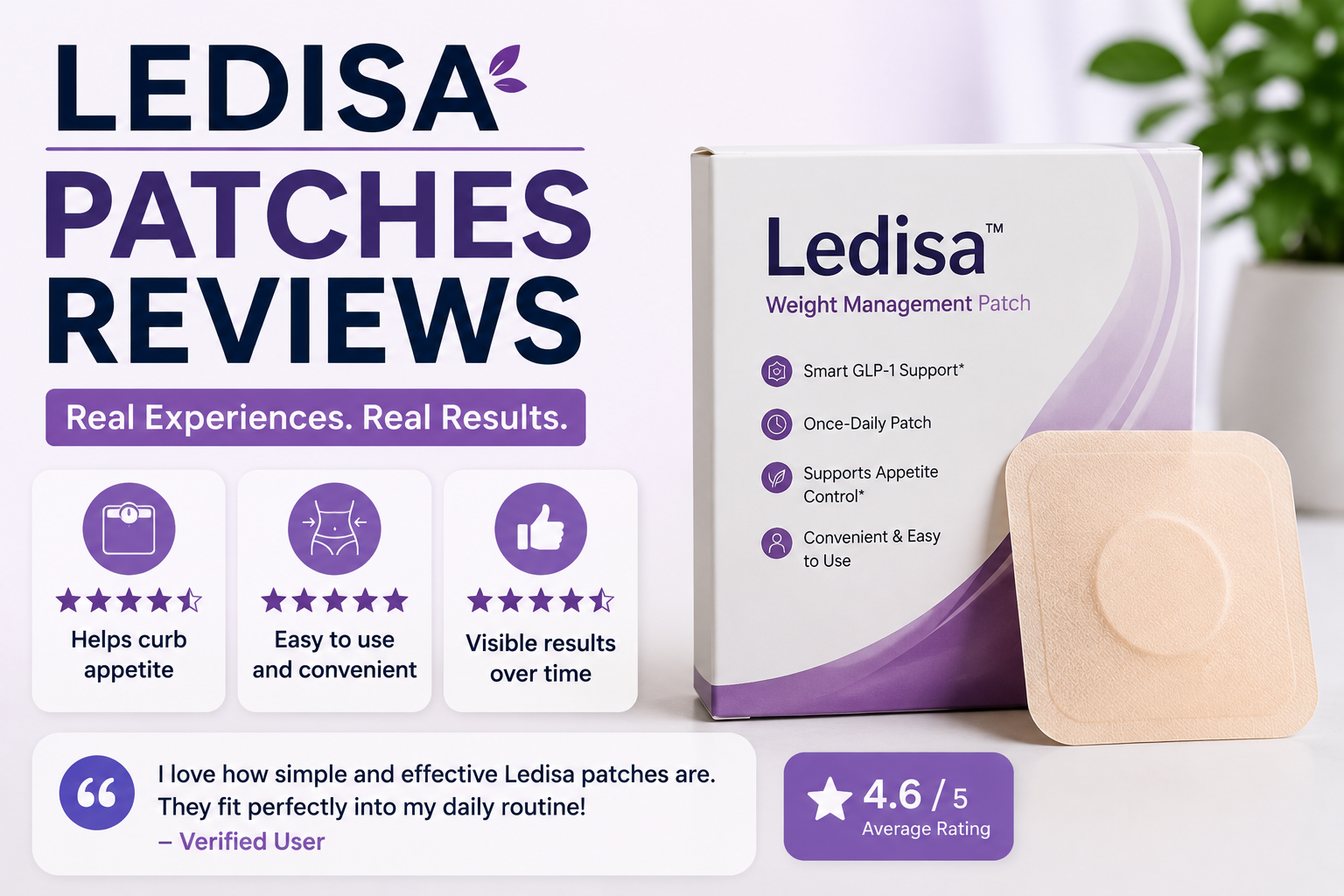
An independent claim audit of ingredients, patch absorption, customer feedback, pricing, subscriptions, and safety.
People searching for Ledisa patches reviews are usually trying to answer two separate questions: Do the patches reduce appetite or support weight loss, and is the company offering a fair, transparent purchase? Those questions deserve separate answers. The product is convenient and the brand openly states that its so-called GLP-1 patch does not contain GLP-1 medication. However, the stronger marketing claims are not backed by published clinical trials on the finished patch, and public customer feedback is mixed on results, subscriptions, and refunds.
The most important fact is that Ledisa patches are not a substitute for semaglutide, tirzepatide, or another prescription GLP-1 receptor agonist. They are multi-ingredient botanical patches marketed for appetite and weight-management support. As of this review, there is no FDA-approved GLP-1 weight-loss patch, and no publicly available evidence shows that the Ledisa formula delivers clinically meaningful amounts of its listed ingredients through intact skin.
| KEY TAKEAWAYS
· Ledisa says its GLP-1 patch contains no GLP-1 drug and is not a GLP-1 receptor agonist medication. · We found no peer-reviewed human trial of the finished Ledisa patch and no public pharmacokinetic data showing how much of each ingredient reaches the bloodstream. · Different Ledisa product pages displayed different ingredient lists and presentation details during this August 2026 review, so buyers should verify the label on the exact package they receive. · Customer star ratings are difficult to interpret because many reviews discuss ordering or hopes for results rather than measured weight change. · The return policy is more limited than the phrase “90-day money-back guarantee” may suggest because opened products generally cannot be returned and renewal orders have separate restrictions. |
Should You Buy Ledisa Patches? The Bottom Line First
Our editorial verdict: Ledisa patches are not recommended as a weight-loss treatment or as an alternative to prescription GLP-1 therapy. The main problem is not that every botanical ingredient is automatically useless. The problem is that studies of swallowed ingredients cannot be assumed to apply to a small skin patch, especially when absorption, delivered dose, manufacturing consistency, and finished-product outcomes have not been demonstrated publicly.
Someone may still like the simplicity of wearing a patch, but convenience is not proof of effectiveness. A fair review must give more weight to verified formulation and clinical data than to testimonials, before-and-after images, or the phrase “science-backed ingredients.”
How Does Ledisa Score on the Factors That Matter?
| Review area | Rating | Reason |
| Convenience | 4/5 | One patch daily is simple and needle-free. |
| Ingredient transparency | 2/5 | Ingredients are listed, but current pages are inconsistent and a clear delivered dose is not established. |
| Finished-product evidence | 1/5 | No published clinical trial or absorption study of the finished Ledisa patch was found. |
| Customer-review usefulness | 2/5 | Large review volume exists, but many comments do not document product use or objective results. |
| Purchase transparency | 2/5 | Discounts, refill options, and return conditions require careful reading. |
| Overall evidence-based value | 2/5 | The product may be easy to use, but the core weight-management claims remain unproven. |
What Are Ledisa Patches, Exactly?
Ledisa markets a collection of wellness patches, including appetite-support products. On the brand’s official GLP-1 patch page, the company describes the product as a botanical patch intended to complement healthy eating and exercise. The page also states that the product does not contain GLP-1 and is not a GLP-1 agonist drug. That disclaimer is important because the product name can otherwise create an association with prescription medications that have a very different mechanism, evidence base, dosing system, and regulatory status.
The company instructs users to apply one patch to clean, hair-free skin for up to eight hours and rotate application sites. Depending on the Ledisa page viewed, the formula may list berberine, garcinia cambogia, cinnamon, L-glutamine, chromium, apple cider vinegar extract, resveratrol, alpha-lipoic acid, pomegranate, B vitamins, magnesium, psyllium, hops, bitter melon, green tea, and other ingredients.
| Why the ingredient-page differences matter
During this review, one Ledisa page listed a group of ingredients without per-ingredient amounts, while another indexed product page displayed a longer formula with specific milligram quantities. Formulas can change, and old pages can remain indexed, but a buyer should not have to guess which version is current. Check the physical package label before applying the first patch and save a photo for your records. |
What Do the Marketing Claims Actually Prove?
| Marketing message | What can be verified | Evidence gap |
| “Supports GLP-1 production” | Some oral nutrients can influence glucose metabolism, gut signaling, or appetite-related pathways. | No published trial shows that this patch raises GLP-1 to a clinically meaningful level. |
| “Direct through-skin delivery” | Transdermal delivery is possible for carefully engineered drugs with suitable properties. | No public absorption study shows the delivered dose of Ledisa’s botanical blend. |
| “Science-backed ingredients” | Individual ingredients have been studied, usually by mouth and at defined doses. | Ingredient studies do not validate a different multi-ingredient patch formula. |
| “Reduces hunger and cravings” | Some customers report feeling less hungry. | Testimonials cannot separate product effects from diet changes, expectations, or normal fluctuation. |
| “Healthy weight management” | The company advises pairing patches with diet and exercise. | No controlled finished-product trial establishes how much, if any, weight change is caused by the patch. |
Why Is the Patch Format the Biggest Scientific Unknown?
The skin is designed to keep substances out. Successful transdermal drugs usually have carefully selected molecular properties, validated delivery systems, stable dosing, and human pharmacokinetic studies. A patch can stick well and still fail to deliver a useful amount of an active ingredient.
A 2026 peer-reviewed review of “natural GLP-1” transdermal products identified 24 patch products and one gel product in the category. The authors found widespread problems such as absent certificates of analysis, inconsistent disclaimers, deceptive advertising, poor reviews, and reports suggesting lack of efficacy or adverse effects. The paper evaluated the category rather than proving that every individual brand has the same problem, but it reinforces why a product-specific absorption study is essential.
This distinction is often missed in supplement advertising. Evidence that oral berberine affects a laboratory marker does not show that several milligrams placed on the skin will reach the blood. Evidence that a prescription transdermal patch works does not prove that an herbal patch works. Route, formulation, dose, and manufacturing all matter.
What Should You Know About the Main Ingredients?
Berberine
Berberine has limited evidence for modest effects on blood sugar and body weight when taken orally in studied doses. It can cause gastrointestinal symptoms and can interact with medications. The National Center for Complementary and Integrative Health advises against berberine during pregnancy or breastfeeding. None of that evidence establishes effective delivery from the Ledisa patch.
Garcinia cambogia
Research on garcinia cambogia and weight loss is inconsistent. Any average benefit appears small or uncertain. Rare but serious liver injuries have been reported with garcinia-containing supplements, including multi-ingredient products. It may also interact with medicines affecting the liver or serotonin. The risk from a patch cannot be quantified without reliable absorption data, which is another reason uncertainty does not equal safety.
Chromium picolinate, cinnamon, and alpha-lipoic acid
These ingredients are commonly marketed for glucose support. Oral studies have produced mixed results, and they may affect blood sugar in some people. Anyone using insulin or another glucose-lowering medication should discuss the product with a pharmacist or clinician rather than assuming a topical supplement cannot interact.
Apple cider vinegar, pomegranate, resveratrol, vitamins, and plant extracts
These ingredients sound familiar and may have nutritional or antioxidant associations, but a long ingredient list is not proof of a stronger product. Without the verified amount released from the patch and absorbed through the skin, shoppers cannot compare the formula with doses used in human research.
Adhesive and skin exposure
The most predictable risk is local irritation. Adhesive patches can cause redness, itching, burning, blistering, or contact dermatitis. Heat can change patch behavior, which is why the company advises against using a heating pad over the product. Stop use and wash the area if a reaction develops. Seek medical care for facial swelling, trouble breathing, widespread hives, severe blistering, or signs of infection.
What Do Ledisa Customer Reviews Really Show?
Public review platforms show a large number of Ledisa comments, but review volume should not be confused with clinical proof. Positive comments frequently mention easy ordering, fast shipping, convenience, reduced snacking, or a subjective sense of appetite control. Negative comments describe no noticeable effect, skin irritation, difficulty canceling, unexpected renewal charges, or refund disputes.
A notable limitation is that some highly rated comments were posted before the reviewer had received or meaningfully used the product. Statements such as “hope it works,” “ready to start,” or praise for the checkout process can raise a brand’s average rating without telling a future buyer whether the patch changes appetite or weight.
Reviews are most useful when they include the exact product version, length of use, starting and ending weight, diet or medication changes, adverse effects, whether the reviewer purchased a subscription, and whether the review was incentivized. Even then, an individual experience cannot establish cause and effect.
| A better way to read testimonials
Give more weight to detailed, verified-purchase reviews written after at least several weeks of use. Give less weight to comments about anticipation, packaging, ordering speed, or dramatic results without dates and measurements. |
How Much Do Ledisa Patches Cost, and What Should You Check at Checkout?
Pricing changed across the brand’s active and indexed pages during this review. The main site displayed discounted per-pack prices that varied by quantity and whether the buyer selected a one-time purchase or subscription. A one-month promotional price around $25 was shown in some purchase paths, while regular or multi-pack totals were higher. These numbers can change, so the cart total and renewal language are more important than a headline discount.
- Confirm whether “Subscribe & Save,” “Smart Refill,” or a similar recurring option is selected.
- Write down the renewal frequency and the date the next charge is scheduled.
- Take screenshots of the checkout page, price, cancellation terms, and guarantee language.
- Do not assume a multi-pack price is the total price. Verify whether it is displayed per pack or for the entire order.
- Review the card statement after purchase and save the order confirmation email.
Does the 90-Day Guarantee Mean You Can Try the Product Risk-Free?
Not exactly. Ledisa advertises a 90-day money-back guarantee, but its published return policy says opened wellness products generally cannot be returned for hygiene reasons. For a multi-pack order, the customer may be able to return unopened, unused packs within the stated window. The guarantee applies to the original purchase, while later subscription renewals are governed by separate cancellation rules and are not refunded solely because the customer forgot to cancel before the billing cutoff.
That does not make the policy unusual for a consumable product, but it does mean “risk-free” may be understood more broadly than the written conditions allow. Read the current policy before ordering and contact customer support promptly if the purchase confirmation does not match what you intended.
Who Should Avoid Ledisa Patches or Ask a Clinician First?
The brand advises people who are pregnant, nursing, younger than 18, or taking medication to consult a healthcare professional. Extra caution is appropriate for people with diabetes, liver disease, kidney disease, a history of severe allergies, sensitive skin, or anyone taking multiple prescriptions or supplements.
- Do not place a patch on broken, inflamed, sunburned, recently shaved, or infected skin.
- Do not layer a heating pad, hot-water bottle, tight compression wrap, or another topical product over the patch.
- Do not use the patch to replace prescribed diabetes or obesity treatment.
- Stop using it if you develop persistent redness, burning, blistering, dizziness, vomiting, yellowing of the skin or eyes, dark urine, or another concerning symptom.
- Bring the package or a clear label photo to a pharmacist when checking for interactions.
What Should You Do If You Already Bought the Patches?
First, check whether the order is one-time or recurring. Next, compare the ingredient label on your package with the formula shown when you purchased it. If you choose to use the product after discussing it with a healthcare professional, change only one variable at a time. Starting a new diet, several supplements, and a patch together makes it impossible to identify what caused a benefit or side effect.
Track appetite, meals, body weight, waist measurement, skin reactions, sleep, and other symptoms for a defined period. Use the same scale, similar clothing, and the same time of day. Stop if the product causes irritation or if you are delaying evidence-based care while waiting for it to work.
What Better-Supported Options Exist for Weight Management?
The best option depends on health history, body mass index, medications, insurance, pregnancy plans, and personal goals. Evidence-based care may include nutrition counseling, resistance and aerobic exercise, sleep and stress treatment, behavioral therapy, treatment of conditions that affect weight, and FDA-approved medication when appropriate. Bariatric procedures may be considered for some people based on clinical criteria.
A primary care clinician, obesity-medicine specialist, or registered dietitian can help separate realistic options from marketing. Someone who wants to avoid injections can ask about approved oral therapies, but the right choice requires medical screening. A supplement patch should not be used to self-treat diabetes or to imitate a prescription drug.
Frequently Asked Questions
Do Ledisa patches contain semaglutide or tirzepatide?
No. Ledisa’s own disclaimer says the patches do not contain GLP-1 and are not GLP-1 receptor agonist medication. They contain botanical and nutrient ingredients marketed as supporting the body’s natural processes.
Are Ledisa patches FDA-approved?
No. There is no FDA-approved Ledisa GLP-1 patch and no FDA-approved over-the-counter GLP-1 weight-loss patch. The FDA does not preapprove supplement-style products for effectiveness in the same way it reviews prescription drugs.
Can a Ledisa patch lower blood sugar?
There is not enough product-specific evidence to know. Several listed ingredients have been studied orally for glucose-related effects, but the patch’s absorption and delivered dose are not established. People using diabetes medication should not experiment without professional guidance because an unexpected glucose change can be dangerous.
How long does Ledisa say the patches take to work?
Some brand pages recommend daily use for three to six months, while marketing timelines describe changes beginning earlier. Those timelines are not the same as results from a controlled trial of the finished patch.
Are Ledisa reviews fake?
It is not possible to label all reviews as genuine or fake from public information alone. The more important issue is review relevance. Many comments evaluate the ordering experience or express hope before product use, while others report specific positive or negative experiences. Neither group replaces clinical evidence.
Can I return opened Ledisa patches?
The brand’s current return policy says opened wellness products generally cannot be returned. Unopened packs from a qualifying order may be eligible within the policy window. Subscription renewals have additional restrictions, so check the current terms and contact the company promptly.
Final Verdict: What Do Ledisa Patches Reviews Add Up To?
The available Ledisa patches reviews do not provide reliable proof that the product causes meaningful appetite suppression or weight loss. The company deserves credit for stating that the patch contains no GLP-1 drug, but the product name and stronger promotional language can still encourage comparisons with prescription medications that are not scientifically justified.
For a product built around transdermal delivery, the missing information is fundamental: a verified current formula, quality documentation, ingredient-release testing, human absorption data, and a controlled trial of the finished patch. Until those are available, Ledisa should be viewed as an unproven wellness product, not a GLP-1 treatment. Consumers who still consider purchasing should read the subscription and return terms carefully, verify the package label, and discuss the ingredients with a pharmacist or clinician.
| Medical disclaimer
This article is for general educational purposes and does not diagnose, treat, or replace individualized medical care. Seek urgent help for trouble breathing, facial or throat swelling, severe blistering, fainting, or another serious reaction. |
